SEAWEED Polymer Netzwerk
SEAWEED Polymer Netzwerk
Macroalgae as a resource for offshore production, biopolymers and biohydrogen.
Project overview
Project overview
The network project focuses on three development areas:
SEAWEED OCEAN FARM
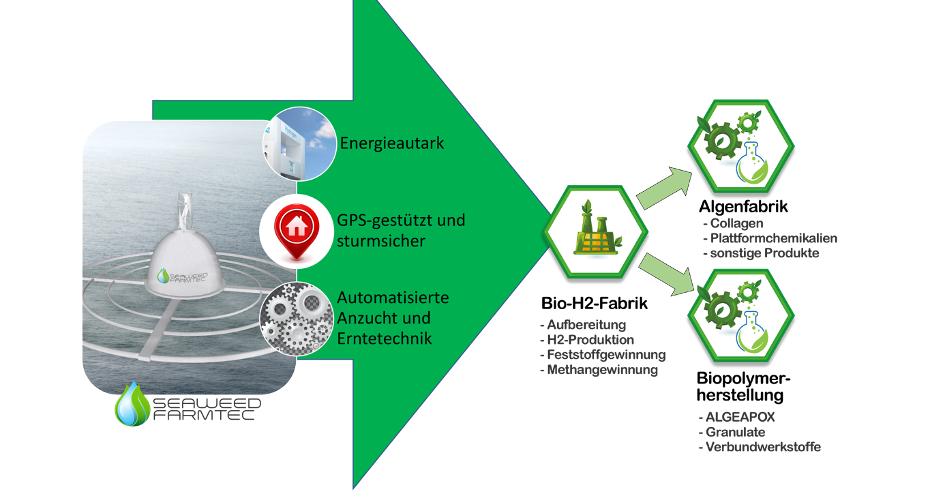
The offshore cultivation and harvesting platform “Seaweed FarmTec” is intended to enable environmentally responsible industrial algae production.
BIOPOLYMER ALGEAPOX
Innovative approaches to the utilisation of algal biomass support the development of new processes for producing sustainable biopolymers.
BIOHYDROGEN FACTORY
Algal biomass can be used for energy recovery and therefore as a feedstock for the production of biohydrogen.
The SEAWEED Polymer Netzwerk network consists of six international small and medium-sized enterprises and two international research institutions. Their long-standing expertise in environmentally responsible energy production and raw-material utilisation is combined. The objective is to develop concepts for reducing the carbon footprint through the most complete possible use of macroalgae.
Innovation
Innovation
Only around 29 per cent of the Earth's surface is suitable for agriculture, which increases the relevance of marine production areas. Cultivating aquatic plants in algae farms is particularly promising because algae can be used in many sectors, including cosmetics, medicine, pharmaceuticals and food.
Algae are often cultivated in near-shore monocultures with potential environmental impacts. The SEAWEED OCEAN FARM is conceived as an autonomous offshore platform for intelligent, low-carbon production. Comprehensive use of the algal biomass, including energy recovery for biohydrogen production, is intended to improve resource efficiency and establish an additional biomass source.
The “SEAWEED OCEAN FARM” is designed as an energy-autonomous, autonomous and storm-resistant offshore platform for the industrial production of macroalgae. GPS-based control is intended to allow independent positioning in open waters without anchoring to the seabed.
Macroalgae harvesting is intended to be largely automated, leaving mainly the onward transport to processing sites to be organised. Industrial cultivation and harvesting are the first steps towards making this biogenic resource available at scale.
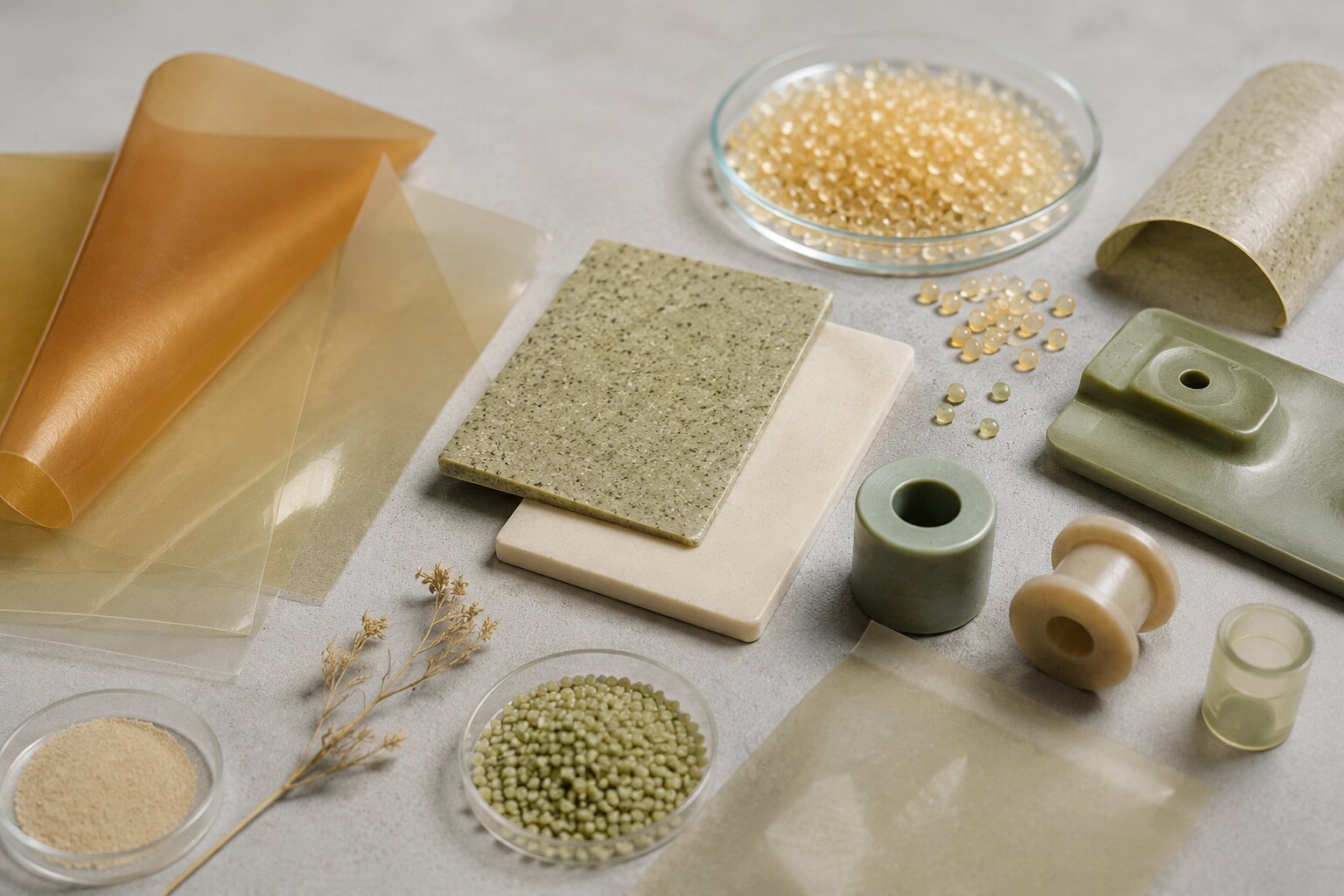
ALGEAPOX refers to a mixture of algal biomass and biodegradable plastics. Such materials are intended as alternatives to fossil feedstocks and petroleum-based plastics, for example in packaging, automotive and construction applications. The ALGEAPOX biopolymer is also intended for moulded products and 3D printing.
Depending on macroalgae quality and species, various valuable substances can be extracted in a biorefinery approach. In addition, the network concept aims to use residual materials for producing methane and biohydrogen.
Initial processing steps are intended to take place in the biohydrogen factory so that the algal biomass can be used comprehensively. Different species may require different value chains. A first step is the production of solid mixtures that can be processed into products in specialised facilities or used directly for biopolymer production.
Biogenic residues generated along the value chain are intended to be recovered energetically to achieve the most complete possible utilisation.
Materials
Biopolymers & biomaterials
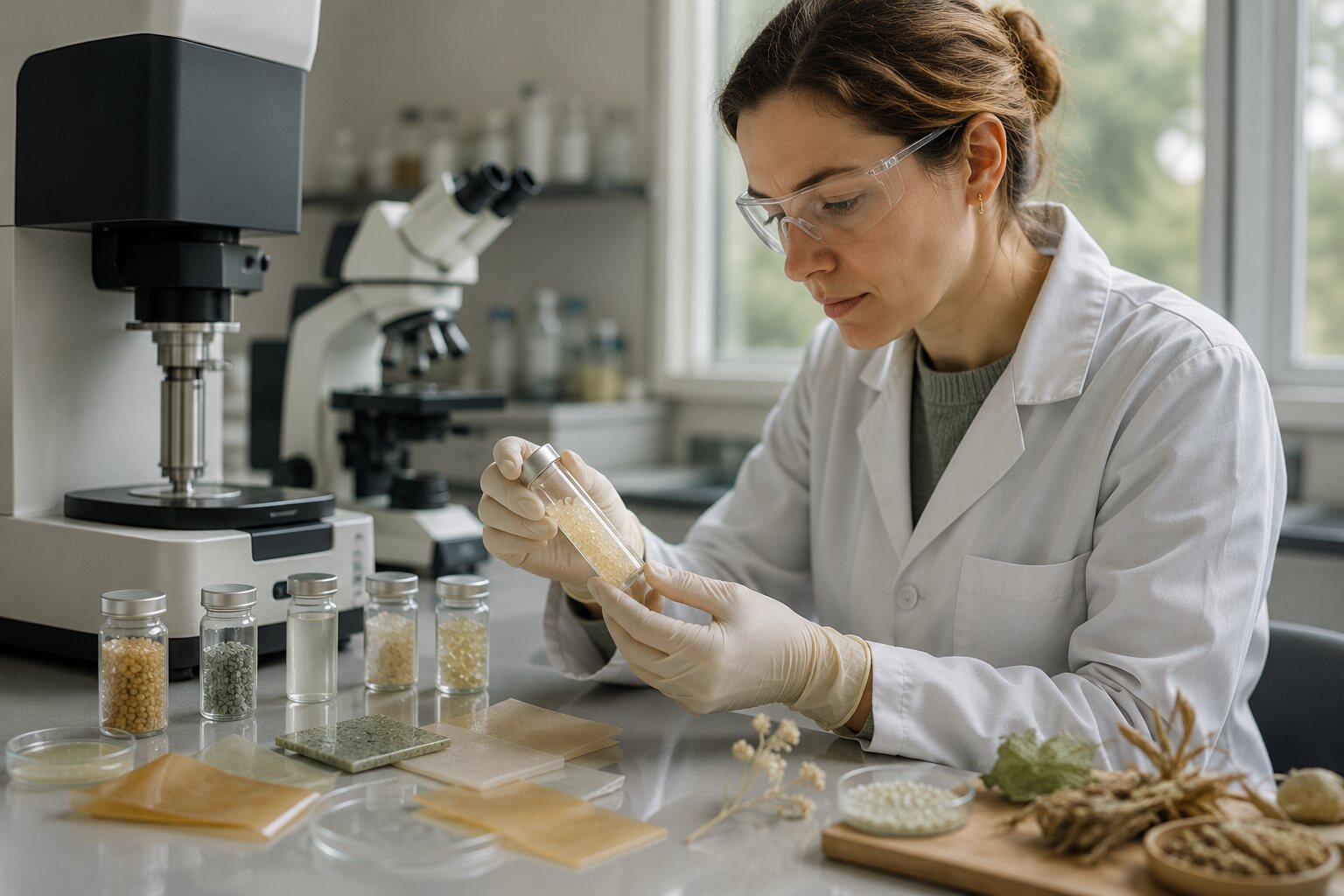
The material use of biogenic raw materials, including macroalgae, opens up new approaches for packaging, moulded parts, coatings and 3D printing. A clear distinction between bio-based and biodegradable is essential.

Contact
Contact SEAWEED / RBI
For questions about SEAWEED Polymer Netzwerk and possible cooperation, please contact Robert Boyle Institut through this local project form.
Robert Boyle Institut e.V.
Im Steinfeld 10
07751 Jena
Germany